
New athletic fields, play areas, and resilience berm planned for Moakley Park redevelopment
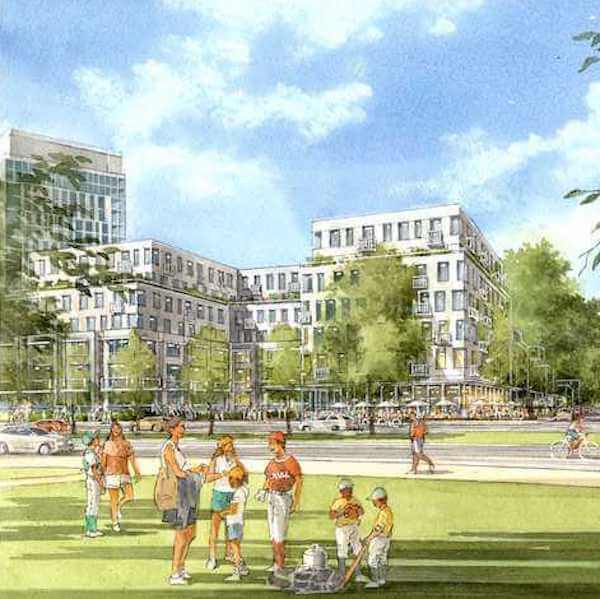
The Resilient Moakley Park project will comprehensively overhaul the 60-acre park to ensure environmental resilience against both urban heat and stormwater, while also enhancing the park’s recreational and public health facilities. The project has been in development for almost a decade, progressing through multiple design phases and rounds of community feedback to envision the best version of Boston’s largest waterfront park.
The redevelopment will occur in two separate phases to minimize the impact on the park during construction. In 2027, Phase A will overhaul the Day Boulevard side of the park with new pathways, a picnic area, and multi-use sports fields. A resilience berm, a “structural wall integrated into the park landscape,” will be constructed through the middle of the park to mitigate damage from coastal flooding and stormwater issues, preventing an estimated $615 million in damages, generating $16 in benefits for every dollar spent.

The berm will also serve to better drain the athletic fields, allowing for a minimum of one extra month of use yearly.
Through 2031, Phase B will add three new baseball diamonds, new playgrounds, spaces for basketball, pickleball, and field hockey, as well as Southie’s first skatepark. The legacy names of the baseball diamonds, and newly christened Billy Baker Field, will be retained, and field work will occur in phases to lessen the impact on local athletics.
King Field will be made up entirely of synthetic turf to lessen maintenance costs, dry faster, and extend the playing season. Kirby, Salmanowich, and Fitzgerald fields will have synthetic infields with natural outfields. The three are also planned to be oriented in a clover-like design, making space for other facilities across the park and shortening the walk of shame when you arrive at the wrong one for practice.

The structure of the new athletic facilities is still being considered, and residents are encouraged to weigh in on the designs. The public engagement process will run through 2026 with additional rounds of community meetings in the Spring and Fall.
The playgrounds will be designed as multi-function gathering spaces with dynamic play environments scattered throughout the park. Based on community feedback, the project will be prioritizing distinct play features different from what already exists in the neighborhood that incorporate natural elements and tie into the park’s landscape. The design also underscores year-round use and inclusivity and space for persons of all ages and abilities.
The exact design of the skatepark has yet to be determined and will be the subject of more community engagement, but the project plans to keep it part of the park as a whole – not tucked away or hidden under more desirable facilities. There are plans to include a range of ledges, curves, and embankments with a preference for clear lanes for street skating.
The park’s working plans can be found here. For more information or to provide feedback on the designs, reach out to Senior Project Manager Marin Braco at [email protected].


Jacob Downey is a contributor to Caught in Dot. He is formerly of The Clock, Plymouth State University’s award-winning student newspaper. He enjoys spending time with his two kittens – Gin and Tonic – reading Uncanny X-Men and writing about local government meetings.


This is going to be incredible… hopefully its built similar to the rendering’s.